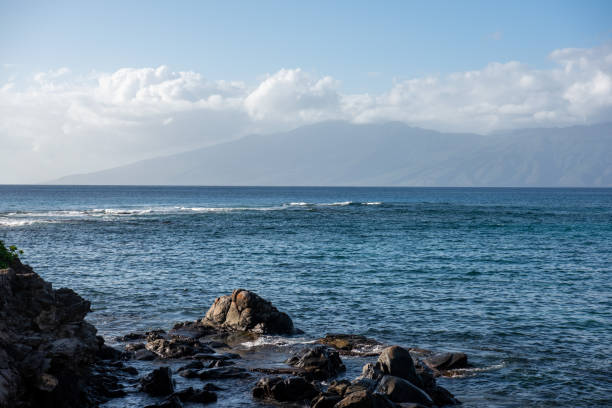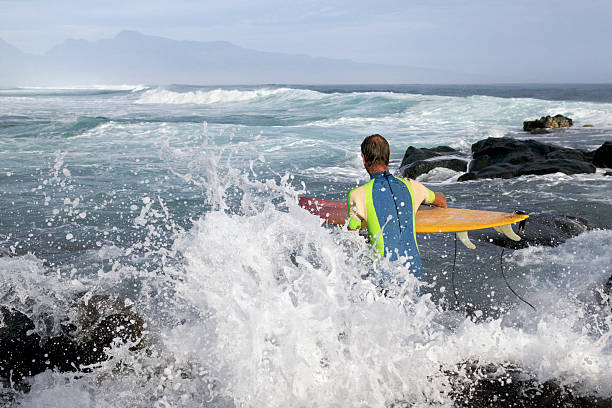
On Maui’s north shore, just past the sleepy town of Haiku, lies a stretch of coastline that transforms into one of the most awe-inspiring spectacles in all of surfing. Peahi, known to the world as Jaws, is not your average surf break. When the right swell arrives, this deep-water reef break produces waves that can tower over fifty feet, drawing the world’s most fearless big wave surfers and the photographers, boat captains, and spectators who come to witness the raw power of the ocean up close.
To understand Jaws, you first have to understand what makes it swell. The break sits at the edge of a deep underwater canyon that acts like a funnel, focusing massive North Pacific swells into a single, thunderous peak. The wave doesn’t break often, but when it does, it does so with a ferocity that has earned it a reputation as one of the heaviest waves on earth. Winter is the season to watch, roughly from November through March, when storms far to the north send energy across thousands of miles of open ocean. Only a handful of swells each year are big enough to activate Jaws, which makes every session something of an event.
The history of riding Jaws is a story of innovation. In the early 1990s, local surfers Laird Hamilton and Dave Kalama pioneered tow-in surfing there, using jet skis to slingshot themselves into waves too fast and too large to paddle into. That breakthrough changed big wave surfing forever and put Peahi on the global map. In 2004, a tow-in competition called the Eddie Aikau-style invitational brought even more attention. Then came 2010, when Shane Dorian paddled into a monstrous wave at Jaws, proving that human-powered surfing belonged there too. These days, both tow-in and paddle surfing happen at Peahi, and the lineup reads like a who’s who of big wave legends.
What does it actually look like from shore? The best viewing is from the cliffs above Peahi, reached by a dirt road off Hahana Road. On a big day, the scene is electric: trucks parked along the roadside, photographers with long lenses, and the roar of jet skis. When a set approaches, the water draws down against the reef in an eerie calm before the wall stands up, throwing a lip wide enough to swallow a house. The sound arrives a moment later, a deep boom you feel in your chest. Surfers drop in at breathtaking speed, carving lines that seem to defy physics, and safety teams on jet skis hover nearby, ready to pull a fallen rider from the churning foam.
The danger at Jaws is real and should never be underestimated. These waves can hold a person underwater for terrifying stretches, and the reef below is unforgiving. This is not a place for beginners, casual thrill-seekers, or even strong intermediate surfers. It’s also not a swimming or snorkeling spot, and visitors should never attempt to paddle out. Watching from the cliffs requires care too, since the terrain is uneven and the edge drops away sharply. Respect signs, stay back from the bluff, and keep an eye on the ocean at all times.
For travelers dreaming of seeing Jaws in person, timing is everything. Follow Maui surf forecasts and social media accounts that track big swells, and keep your plans flexible. If a massive swell coincides with your trip, consider it a gift. Bring binoculars, water, closed-toe shoes, and plenty of patience. Local etiquette matters: park considerately, pack out your trash, and remember this is a working surf break, not a theme park.
Jaws represents something extraordinary about Maui. Beyond the resorts and calm beaches lies a coastline where the ocean shows its full force, and a community of watermen and waterwomen meet it with courage and skill. Whether you’re a surfer or simply someone who loves the sea, standing above Peahi on a giant day is a memory you’ll carry forever.