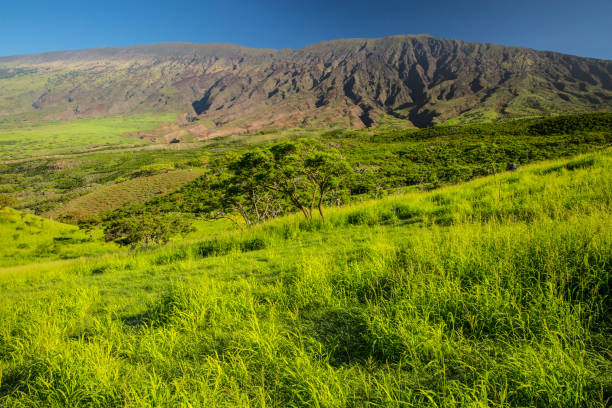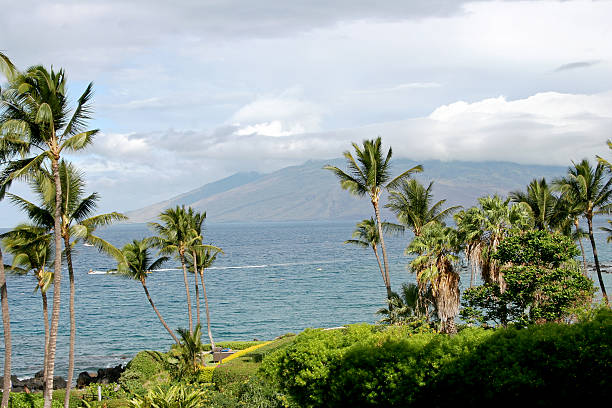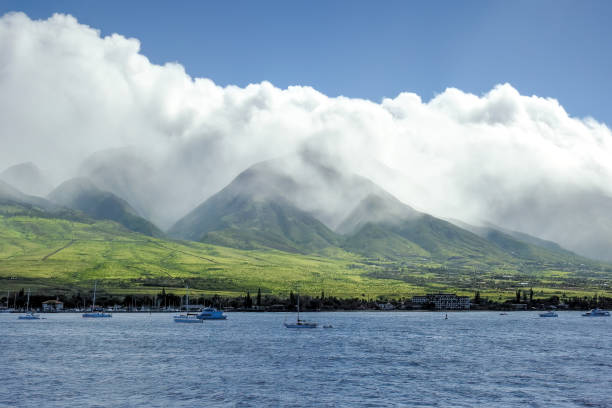
Haleakala is more than a summit. The mountain’s long slopes spill into two distinct hiking worlds: the cool, misty forests of Upcountry and the sun-baked lava coastline of South Maui. Each feels like a different island, yet both are shaped by the same volcano. To hike here is to understand Maui not as a postcard but as a living landscape of fire, rain, wind, and ocean.
Upcountry begins in the ranchlands and small towns of Makawao, Kula, and Pukalani, where the air turns crisp and the views stretch across the central valley. The trails here are often shaded, muddy, and fragrant with eucalyptus, pine, and redwood. In Makawao Forest Reserve, the Kahakapao Loop winds through a surprising forest of tall trees and ginger. It is a favorite for hikers, trail runners, and mountain bikers, with enough climbing to warm your legs but enough shade to keep you comfortable. After rain, the red dirt becomes slick, so footwear with grip matters. Listen for forest birds and the creak of branches in the trade winds.
Nearby, Waihou Spring Trail offers a shorter but steeper adventure. The path switchbacks down into a gulch, crossing eucalyptus and ironwood before reaching a spring-fed area where the air cools. It is a good reminder that Upcountry’s beauty is not only panoramic; it is also intimate, hidden in folds of the mountain.
Higher up, Polipoli Spring State Recreation Area feels almost otherworldly. Fog drifts through cypress, redwood, and sugi trees. Trails weave through a forest that seems more Pacific Northwest than Hawaii, though the red volcanic soil and sweeping coastal views give away the location. Weather can change quickly. A sunny morning may become cold, windy, and wet by afternoon. Layers, rain gear, and a warm hat are wise even when Kula is clear.
For many hikers, the Upcountry experience leads naturally to Haleakala National Park. Hosmer Grove sits just below the summit entrance and offers a gentle nature loop through native and introduced trees. It is a fine place to acclimatize and look for Hawaiian forest birds such as apapane and i‘iwi. From the summit area, the Halemau‘u Trail descends into the crater, crossing cinder and grassland before dropping toward the valley. This is serious high-altitude hiking. The air is thin, the weather exposed, and the climb back up demands respect. Carry more water than you think you need, and turn around before fatigue makes the return difficult.
South Maui tells a different story. Here Haleakala’s southwest rift zone has left broad fields of lava that flow toward the sea. The Hoapili Trail, also known as the King’s Trail, begins near La Perouse Bay at the end of Makena Road. It follows an ancient Hawaiian coastal path over sharp, uneven lava. The route is stark and beautiful. Waves explode against black rock, kiawe trees lean in the wind, and distant islands float on the horizon. Along the way, you may pass old walls, heiau, and fishing shrines. These are sacred and protected sites. Stay on the trail, do not move rocks, and leave every artifact where it lies.
This is not a shaded forest walk. The lava radiates heat, and there is almost no escape from the sun. Start early, carry plenty of water, wear sturdy shoes, and bring sun protection. The coral and lava underfoot can be brutal on sandals. If you hike far, pay attention to the route; lava fields can look alike, and the coastline offers few landmarks. The reward is a raw, elemental Maui that many visitors miss. In winter, you might spot humpback whales offshore. In calm conditions, the water shines in shades of turquoise and deep blue.
Between Upcountry and South Maui, the contrast is the point. One trail leads through mist and redwood; another crosses black lava under a blazing sky. Both belong to Haleakala. Both ask for preparation, humility, and attention. The best way to enjoy them is to move slowly, start early, and let the island set the pace. Check weather and trail conditions, respect closures and private land, and follow leave-no-trace principles. Pack out everything you bring in, including fruit peels and wrappers.
Hiking these trails is not just exercise. It is a way to feel the mountain’s moods and to see how water, elevation, and volcanic history create Maui’s extraordinary nature. Whether you are wandering through a eucalyptus forest above Makawao or following an ancient path across a South Maui lava field, you are walking through Haleakala’s long story. Take your time. The island rewards those who look closely.