Maui’s native plants are not simply background scenery. They are survivors, travelers, and storytellers. Long before Polynesian voyagers arrived, seeds and spores reached these islands by wind, wave, and bird. In isolation, they evolved into species found nowhere else on earth. Haleakala, rising more than ten thousand feet above the Pacific, creates a remarkable range of habitats. In a single day, you can move from salty coastal flats to misty rainforest, from dry upcountry slopes to an alpine desert cold enough for frost. Native plants anchor every one of those worlds. Noticing them deepens every hike, garden visit, and roadside stop.
The most famous native plant on Haleakala is the silversword. Its silver, sword-shaped leaves form a tight rosette that can live for decades. Then, once in its life, it sends up a tall stalk covered in hundreds of purple blooms. After flowering, the plant dies, leaving seeds for the next generation. Seeing a silversword against the volcanic cinders is unforgettable. It is also fragile. Visitors must stay on trails and never touch or step near the plants.
Just below the summit, Hosmer Grove offers an easy introduction to high-elevation forest. The grove includes introduced trees, but it also serves as a gateway to native montane ecosystems. Nearby, the Waikamoi Preserve protects a lush rainforest of koa, ohia, olapa, and other native species. Access is often through guided hikes, which help limit impact and teach visitors about the birds and plants that depend on this forest. Up here, ohia lehua blossoms add bright red bursts to the green. Koa trees rise like giants. The air smells of moss, rain, and eucalyptus-like leaves.
Upcountry Maui is another excellent place to meet native plants. Kula Botanical Garden and Enchanting Floral Gardens of Kula weave together native Hawaiian species, tropical flowers, and cool-climate plants. They are gentle, walkable places where families can slow down and learn. In Kahului, Maui Nui Botanical Gardens focuses on native and Polynesian-introduced plants. Here you can see naupaka, ilima, wiliwili, hala, taro, ti, kukui, and milo. These plants tell stories of canoe voyages, medicine, food, and culture. A garden like this is not just a collection. It is a living library.
For a cultural and botanical experience, Kahanu Garden in Hana is extraordinary. Part of the National Tropical Botanical Garden, it holds one of the largest hala groves in Hawaii and a remarkable breadfruit collection. It is also home to Piilanihale Heiau, a massive temple that reminds visitors that plants and people are intertwined here. Walking among breadfruit, coconut, and hala, you begin to understand how Polynesian voyagers shaped these landscapes, and how native plants continue to shape Hawaiian life.
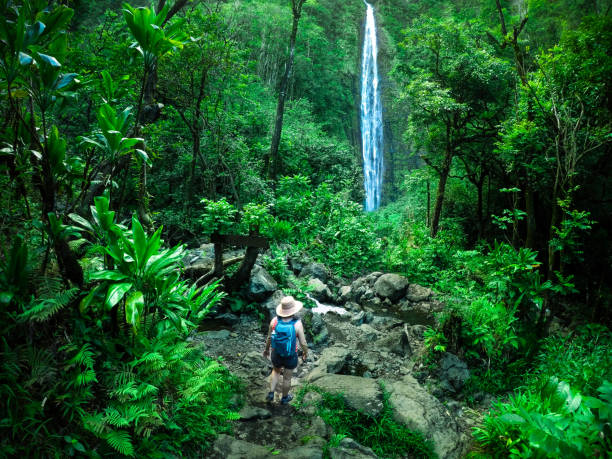
Hikers can find native plants across Maui. In wet forests, look for ohia lehua, koa, mamane, pilo, and akala, a native raspberry with pinkish flowers. In dry lowlands, wiliwili trees show orange blooms, while naio and aalii tough out the heat. Along the coast, naupaka and beach morning glory cling to the sand. The joy is in learning to recognize them. A trail becomes richer when you know which leaves are native, which flowers feed birds, and which plants were brought by ancient voyagers.
Botanical gardens and conservation groups play a vital role in protecting this heritage. They collect seeds, grow rare species, and restore damaged lands. Haleakala National Park and its partners work to protect silversword and other native species from threats like invasive plants, climate change, and trampling. Visitors can help by staying on trails, cleaning boots and gear, avoiding picking flowers or seeds, and supporting gardens through entry fees or donations. Small actions protect fragile places.
Plan your botanical exploring with layers. Upcountry mornings are often clear, but clouds and rain can arrive quickly. The summit is cold and sunny, so bring sun protection, water, and warm clothing. Hana is wet and lush, so closed-toe shoes and insect repellent help. Check current hours and reservation rules before you go, especially for summit sunrise and guided hikes. Go slowly. Sit beside a silversword. Listen to the wind in the koa. Smell the hala. Maui’s native plants are not just pretty. They are the island’s living memory. When you visit with care, you become part of their future.