Haleakala is often imagined as a barren volcanic summit, a place of sunrise crowds and sweeping cinder deserts. Yet its high-elevation forests shelter one of the most remarkable wildlife communities on Earth. For bird lovers, Haleakala is not only a scenic drive; it is a refuge. The native birds of Maui evolved in isolation for millions of years, adapting to misty ohia forests, koa groves, and alpine scrub. Many are found nowhere else. Seeing them requires patience, respect, and a willingness to understand a fragile habitat.
The most celebrated group is the Hawaiian honeycreepers. These finch-like birds descended from a single ancestral species that reached Hawaii long ago, then diversified into dozens of forms. On Maui, the iiwi is a flash of scarlet with a curved salmon bill, built for sipping nectar from ohia lehua blossoms. The apapane, crimson with black wings and a white undertail, often moves in lively flocks through the canopy. The amakihi is smaller and yellow-green, more adaptable, and sometimes seen at lower elevations.
Rarer are the kiwikiu, or Maui parrotbill, and the akohekohe, or crested honeycreeper. They survive in small numbers in wet native forests, mainly on the windward slopes of Haleakala. The kiwikiu uses a thick bill to pry insects from bark, while the akohekohe is striking with an orange face and a tufted crest. Both are critically endangered. Habitat loss, invasive predators, and disease have pushed them to the edge. The greatest modern threat is avian malaria, spread by non-native mosquitoes. As the climate warms, mosquitoes move higher, and honeycreepers have little immunity.
Conservationists are fighting back. They remove invasive ungulates that destroy the understory, build fences to protect preserves, plant native trees, and control rats, cats, and mongoose. Scientists are also testing mosquito-control tools. In Waikamoi Preserve and around Haleakala National Park, staff and volunteers work to keep the forest alive. Visitors can help by staying on trails, cleaning boots and gear, and never feeding wildlife.
For a chance to see native forest birds, head to Hosmer Grove in Haleakala National Park. At about 6,800 feet, this small grove and nearby native patches attract apapane, amakihi, and sometimes iiwi. Arrive at dawn, when birds are active and mist softens the light. Listen for the iiwi’s metallic call or the apapane’s varied songs. Bring binoculars, rain gear, and warm layers. The Hosmer Grove nature trail is short but steep in places, so take it slowly.
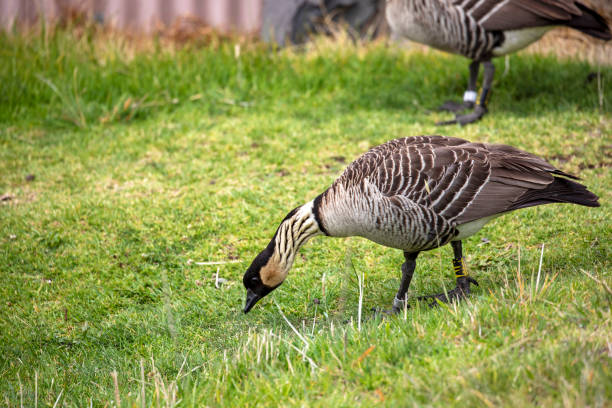
Higher on Haleakala, the summit district is home to the nene, Hawaii’s state bird. It has less webbing, stronger claws, and spends more time on land. Nene are often seen along roadsides and trails in the park. Keep your distance, because they are wild and protected. Do not feed them. Their recovery from near extinction is a conservation success story, but they still face vehicle strikes and predators.
Other wildlife adds to the experience. The Hawaiian hoary bat, or opeapea, is the only native land mammal. It is elusive and hunts insects at dusk. Coastal waters have green sea turtles and seasonal humpback whales, but in Haleakala’s high forests, the birds are the crown jewels. Birds follow food and weather, so the best sightings often come when ohia is blooming.
Spring and summer are excellent for birding, especially in the morning. Winter can be wet and cold, and trails may be muddy. Always check park alerts and respect closures. Guided walks with naturalists can deepen your understanding and support conservation. The Waikamoi Preserve, managed by The Nature Conservancy, offers limited access through guided hikes, usually with reservations required. Some birds are rare, and a quiet forest may reveal only a distant call.
Protecting Maui’s birds means protecting watersheds. Native forests capture mist and rain, recharge aquifers, and prevent erosion. Every visitor can be part of that story by respecting closures, packing out trash, cleaning muddy gear, and supporting conservation groups. The birds of Haleakala are not just checklist items. They are survivors, ambassadors of an ancient Hawaii. To see an iiwi flashing in the mist is to witness something fleeting and precious.