On Maui, surfing is a conversation between you, the ocean, and the reef. The island’s breaks range from gentle rollers in Kihei to fast, hollow walls at Honolua Bay and the powerful peaks of Ho’okipa. Each wave asks for a different set of moves, but the journey from takeoff to barrel follows a rhythm every surfer can learn. The better you understand that rhythm, the more you enjoy the ride, whether you are on a longboard at Launiupoko or a shortboard at a reef break.
The first essential move happens before you stand. Paddling and positioning are the true beginning. Read the lineup, watch how waves break, and notice currents and channels. On a reef break, the takeoff zone may be only a few feet wide. On a beach break, the peak shifts with the sand. Paddle with deep strokes, arch your back, and keep your eyes on the horizon. When the wave lifts you, avoid standing too early. A good takeoff is a committed decision: you feel the drop, place your hands under your ribs, and move your feet beneath your hips in one smooth motion.
The pop-up is the bridge between paddling and riding. Push up, slide your back foot into place, then guide your front foot forward. Stay low. On Maui, trade winds can add bumps and chop, so a lower stance helps you absorb surprises. Keep your knees bent, your weight centered, and your eyes looking down the line rather than at your board. A compact, athletic stance gives you room to adjust.
Once you are up, the bottom turn turns falling speed into direction. As you reach the base of the wave, compress your body, point your lead arm where you want to go, and rotate your shoulders. Pressure the rail and let the board arc upward. On a fast, hollow wave, the bottom turn sets your line for the barrel. On a softer wave, it sets up a trim or cutback. The common mistake is turning too sharply or too late. A good bottom turn feels like loading a spring.
Trimming and pumping keep you in the pocket. Trimming means small shifts of weight forward and back to match the wave’s slope. Pumping means gentle, rhythmic hops from rail to rail to generate speed. On a longboard, you might cross-step to the nose; on a shortboard, you might pump down the line. At Maui’s points and reefs, the pocket can be narrow, so stay close to the curl without getting caught behind it. Use your knees as shock absorbers and keep your upper body quiet. Speed is about timing, not just force.
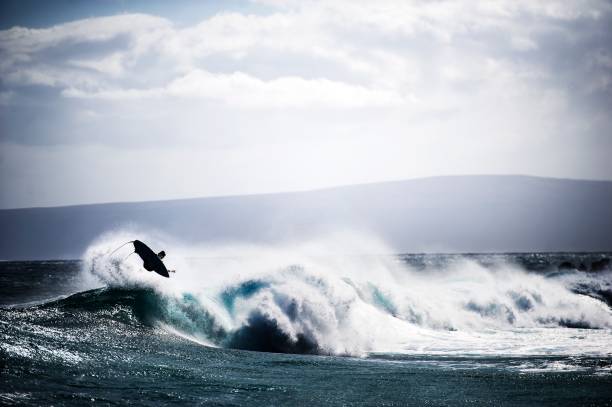
When the wave slows or a section races ahead, a cutback or top turn redirects you back toward the power source. Lead with your eyes and shoulders. Carve off the top, then bring the board back down toward the foam. A roundhouse cutback can finish with a rebound off the whitewater, giving you a fresh burst of speed. These maneuvers help you stay in the right place for the wave’s most critical section. On a fun day at Thousand Peaks or a glassy morning at Puamana, practicing cutbacks builds control for bigger days.
The barrel is the ultimate test of positioning. To get tubed, you often need to take off deep, stall slightly, and tuck into the pocket. Stall by dragging your trailing hand, shifting weight back, or easing off your front foot. Then crouch, grab your rail if needed, and keep your eyes looking toward the exit. In a Maui barrel, the reef is close and the lip can throw fast. Do not fight the wave if it closes out. Pull in, protect your head, and let the wave pass. The best barrel riders are patient. They know the wave decides, not the surfer.
Every move connects. The takeoff sets up the bottom turn. The bottom turn sets up the trim. The trim sets up the cutback. The cutback sets up the barrel. Practice on smaller days, watch better surfers, and feel the wave instead of forcing it. Respect the lineup, and let aloha guide your choices. From your first paddle to your first clean barrel, Maui will teach you as much as you are willing to learn.