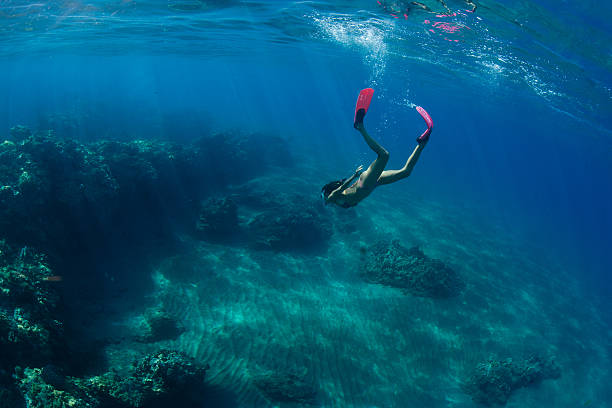
There is a version of Maui that appears only after the last snorkel boat returns to harbor and the sky above Haleakala turns ink-blue. The water does not go to sleep. It changes shifts. Daytime reef fish find cracks and coral heads to rest, while a different cast emerges: hunting octopus, banded coral shrimp, slipper lobsters, eels on the move, and sometimes a reef shark cruising the edge of your dive light. For scuba divers, a night dive is not just another logbook stamp; it is a chance to see the underwater world with fresh eyes.
Maui is unusually well suited to night diving. The leeward coast often offers calmer seas, and several sites that are pleasant by day become fascinating after sunset. Mala Wharf near Lahaina is a favorite. The remains of the old pier create a maze of pilings, rubble, and coral growth that shelters an astonishing variety of nocturnal life. During the day, turtles may glide past; at night, you might find them wedged beneath ledges, resting with a calm that makes you slow your own breathing. Look closely at the pilings and you may spot a day octopus changing color, a Spanish dancer nudibranch unfurling like a red silk scarf, or a frogfish waiting with the patience of a stone.
Black Rock at Ka’anapali is another classic. By day it is a busy snorkel and dive site, but at night the crowds vanish and the reef becomes a stage for predators and scavengers. Divers often encounter sleeping green sea turtles tucked into coral recesses, while octopus, squid, and crustaceans move through the beam of a dive light. If conditions are right, a guided night dive here can feel like floating through a living aquarium.
Molokini Crater is mostly a morning affair because of wind and boat schedules. Yet night diving around Maui is not limited to a single crater. It is about learning to read the ocean in a new way. On a night dive, your beam becomes a narrow window. You see less of the broad reef and more of the small dramas: a cleaner shrimp working the gills of a moray, a hermit crab dragging its borrowed shell across sand, a pair of nudibranchs leaving a delicate ribbon of eggs.
Night diving does require more care than a casual afternoon dive. A reliable primary light and a backup are essential, along with a small tank light or glow stick so your buddy can find you. Buoyancy matters even more in the dark; you want to hover just above the reef without crashing into coral you cannot fully see. A local guide is invaluable for navigation, finding cryptic creatures, and understanding how currents and exits behave after dark. Most Maui dive operators ask for an Open Water certification and offer a night dive as a guided experience or specialty course, so even divers new to darkness can build skills safely.
The payoff is a slower, more intimate kind of adventure. Without the sun, colors are muted until your light touches them, and then they flare: the red of a sponge, the yellow of a butterflyfish, the iridescent blue of a crab’s eyes. The sounds of the reef change too. You hear your own exhale, the click of shrimp, the distant hum of a boat. Between those sounds, there is a stillness that makes Maui feel vast and wild again.
For travelers who dream of Maui, night scuba diving can sound intimidating. It is not for everyone on every trip, especially if you are newly certified or anxious in low visibility. But for frequent visitors who have already snorkeled Molokini, drifted along Turtle Town, and explored the Cathedrals off Lanai, a night dive adds a new layer to the island. It turns a familiar coastline into a mystery and reminds you that Maui’s ocean is not one experience but many. If you go, choose an operator who respects marine life, keep your hands off the reef, and let the darkness reveal what the day keeps hidden. You may surface under a sky full of stars, salt on your lips, already planning the next plunge.