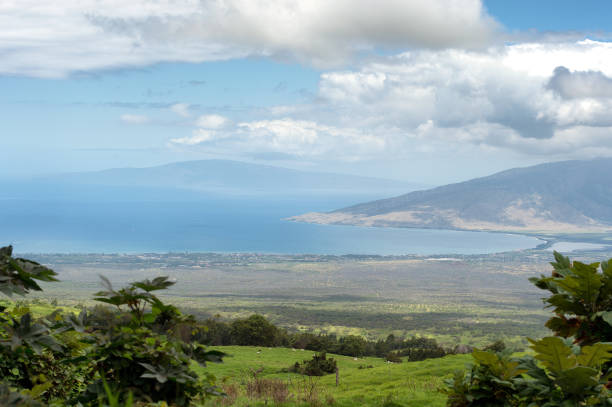
Long before Maui became a dream destination for travelers seeking sun, surf, and scenic drives, it was an island of remarkable ingenuity. Polynesian voyagers arrived by canoe, navigating vast oceans with knowledge of stars, winds, and waves. They found fertile valleys, dry leeward plains, lush windward rainforests, and rich coastal waters. Over generations, they developed the ahupuaʻa, a land division that ran from mountain to sea. This system connected upland forests, streams, taro patches, and shoreline fisheries. At the edge of the sea, it produced one of Hawaii’s most impressive achievements: the loko iʻa, or fishpond.
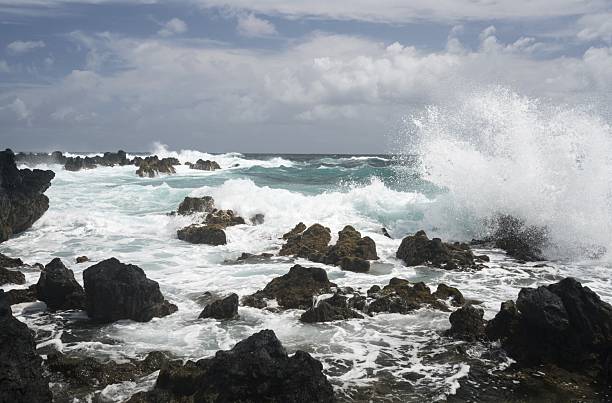
Hawaiian fishponds were not simple pools. They were sophisticated aquaculture systems that used tides, freshwater springs, and lava rock walls to raise fish. On Maui, the most visible examples are coastal walled ponds, known as loko kuapā. A curved wall of stacked basalt separates a calm nursery from the open ocean. Small gates called mākāhā allowed water to flow and juvenile fish to enter, while larger fish remained inside. Species such as ʻamaʻama, the striped mullet, and awa, the milkfish, thrived in these protected waters. The ponds provided reliable protein for communities and demonstrated a deep understanding of ecology long before the word existed.
Koʻieʻie Fishpond in Kihei is one of Maui’s surviving treasures. Built centuries ago, its massive rock wall stretches along the shoreline, a quiet reminder of a time when the coast was managed with care rather than concrete. The pond was part of a larger network of fisheries, wetlands, and settlements. It was not merely a food source. It was a classroom, a gathering place, and a symbol of chiefly responsibility. Aliʻi, the chiefs, held authority over the land and sea, while konohiki managed resources and organized labor. Commoners maintained the walls, cleared silt, and watched the tides. Harvests were governed by kapu, or sacred rules, that protected spawning seasons and prevented overuse. Abundance came from restraint as much as from engineering.
The arrival of Europeans in 1778 changed everything. Contact brought trade, disease, new weapons, and new religions. Kamehameha I eventually unified the Hawaiian Islands, and Maui became part of a rapidly changing kingdom. In 1819, the kapu system was abolished. Missionaries arrived, whaling ships crowded Lahaina Harbor, and sugar plantations began to reshape the landscape. The Māhele of 1848 introduced private land ownership, separating many Hawaiians from the lands their families had tended for generations. Plantation agriculture diverted streams for irrigation. Coastal wetlands were dredged, filled, or polluted. Invasive plants and animals spread. One by one, many fishponds fell silent.
Yet the story did not end there. In recent decades, Maui’s fishponds have become focal points for cultural renewal. Community groups, schools, and cultural practitioners have worked to restore Koʻieʻie and other ancient sites. Volunteers remove invasive mangroves, rebuild rock walls, monitor water quality, and replant native vegetation. These projects are practical acts of history. They reconnect people to traditional knowledge and show how Indigenous science can help address modern issues such as sea-level rise, coastal erosion, and food security. For Hawaiians, restoring a fishpond is also restoring relationship: to ancestors, to land, to ocean, and to one another.
For travelers, Maui’s fishponds offer a chance to experience history in a living landscape. A visit to a restored pond can be far more meaningful than another afternoon at a resort pool. These are sacred and fragile places, not attractions designed for climbing or collecting. Stay on marked paths, obey posted signs, and never remove stones or marine life. If a community-led volunteer day is open to visitors, join with humility and a willingness to listen. Support local museums, cultural centers, and food businesses that honor Hawaiian traditions. Ask questions respectfully. Remember that Maui is not only a vacation destination; it is a homeland with a long memory.
Driving along the coast, it is easy to see only beaches and condominiums. But look closer, and you may notice a low wall of stones, a shallow pond, a line of mangrove trees being cleared by volunteers. These are clues to Maui’s deeper story. From Polynesian voyagers to Hawaiian kingdom, from plantation era to modern restoration, the island’s history is written in water and rock. The fishponds remind us that the best travel does not just consume a place. It helps us understand it, respect it, and leave it better for those who call it home.