Stand on the dry, sunny slopes above Kihei and you would never guess that a rainforest drips and rustles on the other side of the same mountain. Yet that is exactly what happens on Haleakala, where a single shield volcano holds some of the wettest and some of the driest ground in Hawaii, sometimes only a dozen miles apart.
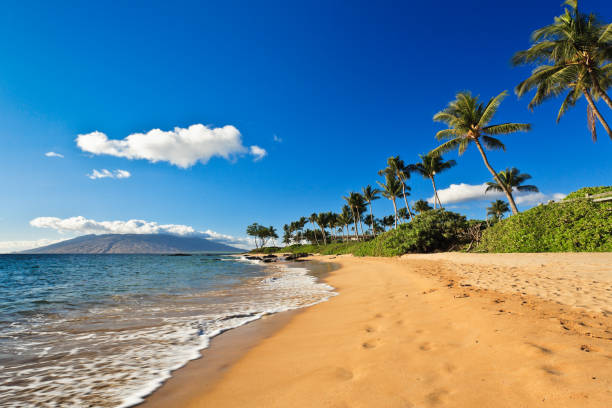
The engine behind this is the trade wind. Northeast trades push across thousands of miles of open Pacific, loading up with moisture as they go. When those winds finally meet Haleakala, they have nowhere to go but up. As the air rises along the windward slopes of the mountain’s northern and eastern flanks, it cools, and cool air cannot hold as much water. The result is near-constant rain, mist, and drizzle over the districts of Hana, Nahiku, Keanae, and Kipahulu, where annual rainfall can top eighty inches, and in the highest, most remote valleys, considerably more. By the time the air spills over the summit and descends toward Kihei, Lahaina, and the resorts of the west and south, it has been wrung dry. Those leeward areas see ten or twenty inches a year. Same mountain, same island, radically different worlds.
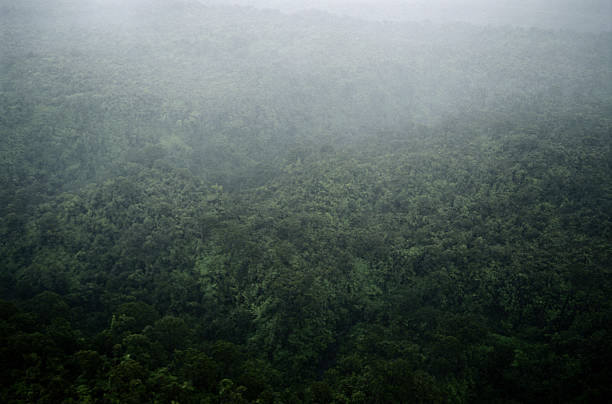
Between the wet and dry extremes lies the cloud forest, perhaps the most magical of Maui’s microclimates. Somewhere between roughly three and six thousand feet on the windward slope, the mountain spends much of its life wrapped in a soft, moving fog. Trees here do not merely drink rain; they comb moisture straight out of the passing clouds. Leaves, branches, and mosses collect tiny droplets that gather, drip, and soak the ground beneath, a phenomenon called fog drip that can add many inches of effective rainfall. The forest that results is thick, damp, and draped in green: ohia lehua with its pom-pom blossoms, olapa, kanawao, and tree ferns standing shoulder to shoulder above a floor of ferns, mosses, and liverworts.
These forests are also a refuge. Native honeycreepers such as apapane, amakihi, and the scarlet iiwi still flit through the canopy, sipping nectar from ohia blossoms, and the critically endangered kiwikiu clings to survival in a handful of high, wet forests on the mountain’s windward flank. The Kipahulu Valley, a vast, roadless rainforest on Haleakala’s southeast side, is so important biologically that it is kept closed to the public entirely, a sanctuary for species found nowhere else on earth.
Lower down, the rainforest becomes something you can actually walk through. The Pipiwai Trail, in the Kipahulu District of Haleakala National Park, climbs roughly four miles round trip past Makahiku Falls and into a dense bamboo forest, where thousands of green stalks creak and knock together in the wind like a living wind chime. Beyond it, Waimoku Falls drops more than four hundred feet down a sheer, fern-covered wall. The trail is muddy, slick, and often crossed by streams that rise fast after rain, so sturdy shoes and a rain jacket are not optional. They are the price of admission to one of the most extraordinary hikes in the islands.
Climb higher and the story flips again. Above the cloud belt, rainfall drops off sharply and the windward forest gives way to high-elevation shrubland and eventually the cold, stark alpine desert of the summit, where silverswords grow out of volcanic cinder. These spiky, silver-haired plants can live for decades and bloom only once, sending up a towering stalk of flowers before they die. Temperatures near the top can dip below freezing while Hana, a short drive below, is warm and dripping wet.
All of this is more fragile than it looks. Feral pigs root through the forest floor, opening the way for invasive plants like strawberry guava, miconia, and ginger. Rats and mosquitoes spread disease, and as the climate warms, malaria-carrying mosquitoes creep to higher elevations, threatening birds that once had refuges in the cool uplands. Fences, predator control, and careful replanting are underway, but the rainforests of Haleakala need visitors to do their part: stay on trail, clean your boots and gear between hikes, pack out everything, and leave every fern and flower where it grows.
The payoff, though, is worth every muddy step. Somewhere on that climb, the sun will break through the mist, a rainbow will arc over the valley below, and you will understand why this wet, green side of Haleakala feels less like a landscape and more like a living thing.