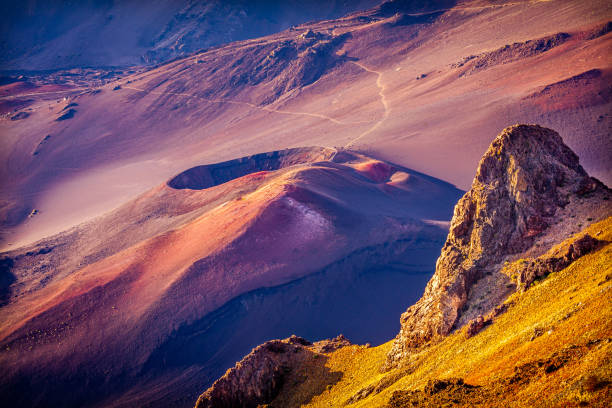
Standing at the rim of Haleakala Crater just after dawn, you may feel as though you have stepped onto another planet. The valley below is not a single crater but a vast, sculpted depression formed by erosion and volcanic activity. Cinder cones rise in shades of rust, charcoal, and gold. Clouds sometimes pour over the rim like slow-motion waterfalls. To hike into this landscape is to leave tropical Maui behind and enter a high-altitude wilderness of silence, stone, and sky.
The Sliding Sands Trail, also known as Keonehe’ehe’e, is the classic introduction to the crater floor. It begins near the summit visitor area and descends roughly 2,500 feet over four miles. The path is loose, sandy, and cindery, and each step down invites you farther. Along the way, you pass native silverswords, extraordinary plants that look like silver swords thrust into volcanic soil. They bloom once in their lives, sending up a spectacular stalk before dying. Because the descent is gradual, it is easy to forget that you must climb back up. The return trip is the true test, especially at this altitude, where every switchback can feel twice as long.
For a more varied route, the Halemau’u Trail offers dramatic ridgeline views and switchbacks carved into the cliff face. Many hikers combine it with Sliding Sands for an eleven-mile traverse. This one-way hike requires a shuttle, a second vehicle, or a prearranged pickup. You cross the Rainbow Bridge, a narrow land bridge that looks fragile yet has endured countless storms. The trail passes through grassland, jagged lava, and open cinder fields. If you are lucky, you may see nene, Hawaii’s protected state goose. Keep your distance and never feed them. The crater is not only a geological wonder but a fragile ecosystem.
Backpackers can stay in one of the crater’s wilderness cabins. Permits are required and often booked months in advance. The cabins are rustic, with bunk beds and basic supplies, but they offer a rare chance to sleep beneath some of the darkest skies in the world. Side trails lead to cinder cones, lava tubes, and quiet overlooks. Water sources are unreliable, so carry all you need or confirm conditions with park staff. Weather can change fast, and a sunny morning may become cold, windy, and wet by afternoon. Treat every hike here as a serious mountain adventure, not a casual beach walk.
Altitude is the invisible challenge. The summit sits at nearly ten thousand feet, and many visitors feel lightheaded, short of breath, or nauseated. Give yourself time to acclimatize. Drink more water than you think you need. Eat salty snacks. Avoid alcohol the night before. If you develop a headache that will not quit, dizziness, or confusion, turn around. The crater will still be there next time. Start early to avoid afternoon clouds and heat. Bring layers, including a windproof jacket, hat, gloves, sunscreen, and sunglasses. The sun is intense, and shade is almost nonexistent.
Haleakala is a sacred place in Hawaiian culture, linked to legends of Maui and the demigod who snared the sun. Visitors should move through it with respect. Stay on marked trails to protect fragile plants and prevent erosion. Pack out everything you bring in, including food scraps and trash. Do not stack rocks or build cairns; they can mislead other hikers and disturb natural and cultural features. Silence is a gift here. Listen to the wind, the crunch of cinders underfoot, and the stillness that settles over the crater at midday.
Not every crater experience must be a full-day epic. Shorter hikes still deliver staggering views. Walk a portion of Sliding Sands to the first overlook and return, or follow Halemau’u to the Rainbow Bridge and back. Sunrise and sunset turn the cinder cones pink, orange, and deep purple. Stargazing after dark is unforgettable, but bring a headlamp and warm clothing if you stay late. Check the weather and trail conditions before you go. Carry a paper map, because phone service is unreliable. Tell someone your route and bring extra food and water. Trekking poles help on the loose descent and long climb out. Sturdy shoes are essential. If you are unsure about altitude or distance, enjoy the view from the rim. The crater rewards preparation.