Maui is an island built by fire, and Haleakala is its most dramatic display. Along with the older West Maui volcano, Mauna Kahalawai, Haleakala rose from the Pacific floor as the Pacific Plate drifted over a hotspot. Eruption after eruption sent fluid basalt lava spreading widely instead of piling into a steep cone. The result was a shield volcano, broad and gently domed. Today it stands more than 10,000 feet above sea level, but most of its height lies hidden beneath the waves. From summit to shoreline, its volcanic past is written in stone.
The summit area is called Haleakala Crater, but it is not a single volcanic crater. It is a vast depression shaped by erosion, then modified by cinder cones and lava flows. The basin stretches about seven miles long, two miles wide, and nearly 2,600 feet deep. Inside, the landscape looks like another planet: rust-red cinders, dark basalt, pale ash, and scattered cones rising from the floor. Hikers on Sliding Sands Trail descend through layers of volcanic history. The silence is immense, broken only by wind and the crunch of gravel. It is one of Maui’s best places to feel the island’s geologic pulse.
Cinder cones dot the summit and slopes. They formed when gas-rich lava erupted explosively, throwing fragments into the air that fell and built up around a vent. Some are red because iron in the rock oxidized; others are black or gray. Lava tubes tell another story. These tunnel-like caves formed when a lava flow’s surface cooled and hardened while molten rock kept flowing underneath. After the eruption ended and the lava drained, a hollow tube remained. Near Hana, visitors can walk through one and see smooth, undulating walls where rivers of fire once rushed.
Water has been as important as fire in shaping Haleakala. Windward slopes catch trade winds, wringing moisture from clouds and feeding rainforests of ohia, koa, and ferns. Streams cut deep into the volcano’s flanks, carving gullies and valleys. Koolau Gap and Kaupo Gap are dramatic reminders of erosion working over hundreds of thousands of years. Rain and time sculpted the summit depression, deepened canyons, and created the sharp ridges that make the Road to Hana so thrilling. On the leeward side, the mountain blocks moisture, creating dry grasslands and rocky lava fields. That rain shadow lets you drive from lush jungle to arid coast in under an hour.
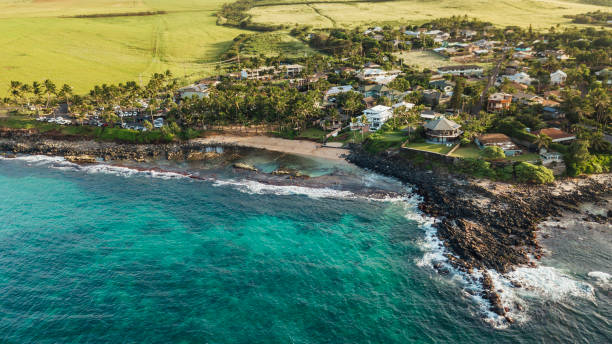
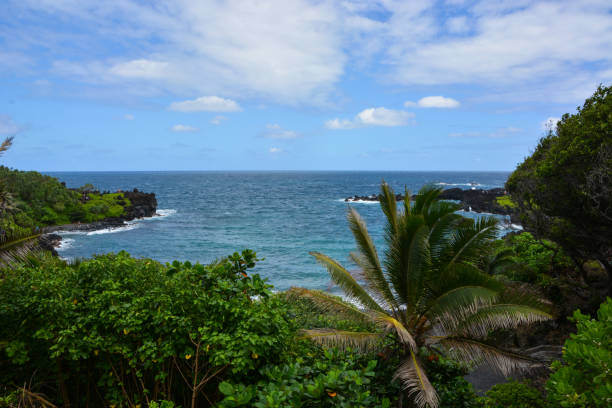
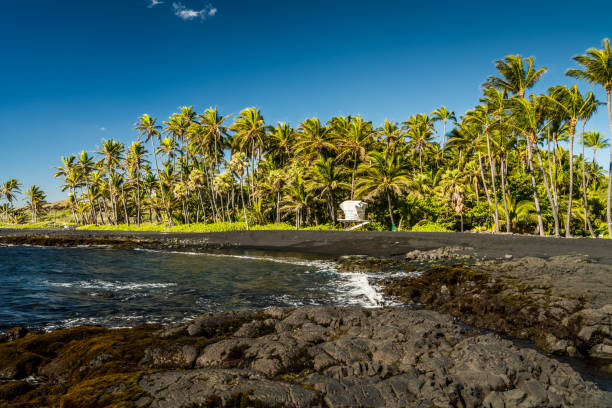
At the shoreline, volcanic landforms meet the sea in striking ways. Lava flows that reached the ocean cooled into jagged cliffs, boulder beaches, and black sand. Waianapanapa State Park’s Pa’iloa Beach is made of lava fragments worn by waves. Sea arches, blowholes, and lava benches reveal where molten rock once poured into the Pacific. Offshore, Molokini is a partially submerged volcanic crater that now draws snorkelers into clear, crescent-shaped waters. Even Maui’s coral reefs are tied to its volcanic foundation, because lava creates the shelves and rocky habitats where corals grow.
The older West Maui volcano, Mauna Kahalawai, offers a different chapter. It erupted long before much of Haleakala’s visible surface formed, and erosion has had more time to work. Iao Valley, with its iconic Iao Needle, is a deeply eroded volcanic remnant. Its steep walls and green fluted ridges show how water and time transform hard basalt into a landscape both ancient and alive. Together, Haleakala and Mauna Kahalawai created the valley connecting Maui’s east and west sides, making the island a single story of eruption, collapse, weathering, and renewal.
For travelers, understanding this geology turns a scenic drive or sunrise trip into something richer. You notice layering in road cuts, the color of cinders, the shape of a coastline, the way plants claim new lava. You realize Maui’s beaches, forests, waterfalls, and hiking trails all rest on volcanic foundations. Whether you watch the sun rise from Haleakala’s summit, swim at a black sand beach, or hike through bamboo forest, you are moving through the aftermath of immense forces. The island invites you to slow down, look closely, and appreciate how fire, water, wind, and time created one of the most beautiful places on Earth.