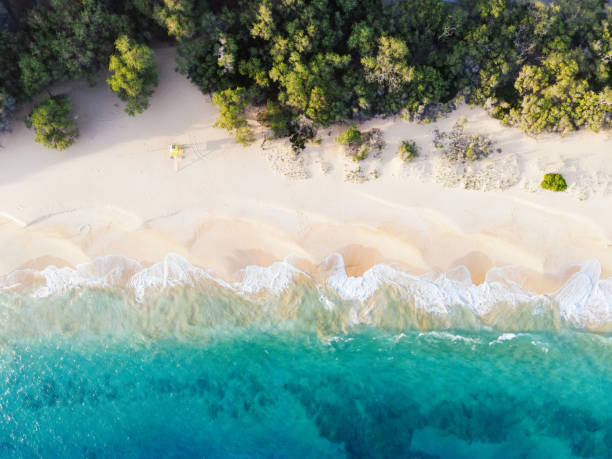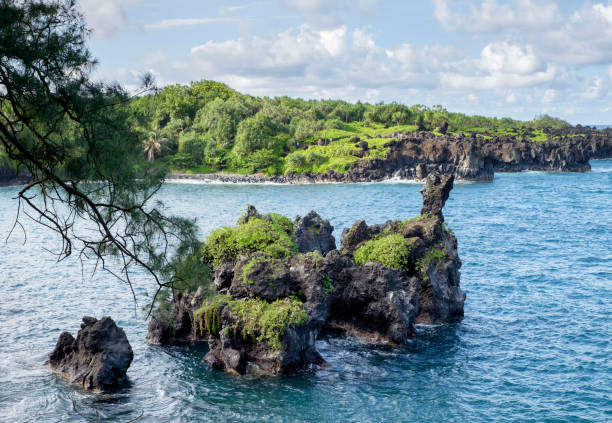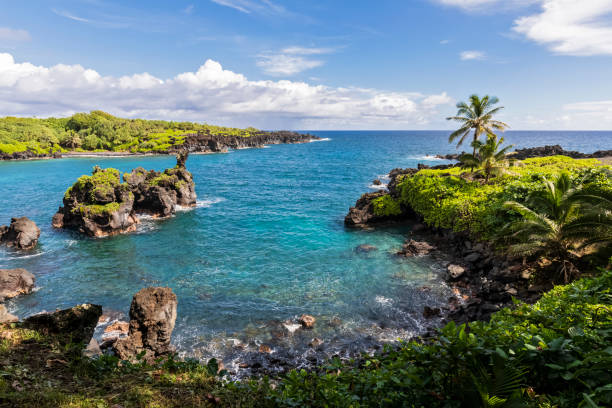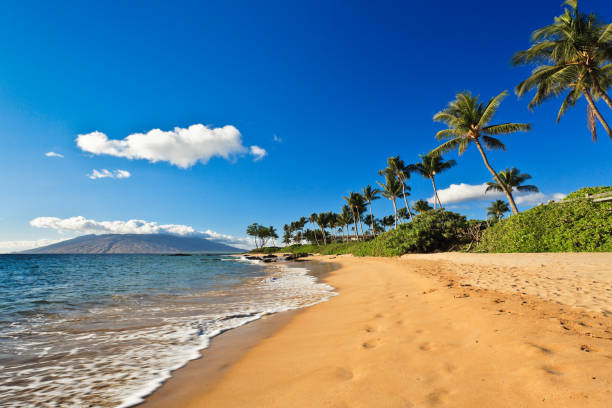
Little Beach sits just beyond the northern tip of Makena’s Big Beach, hidden behind a rugged black lava promontory that makes it feel like a world apart. While Big Beach stretches wide and golden, with powerful shorebreak and plenty of room for families and bodyboarders, Little Beach is smaller, curvier, and more intimate. The sand is soft, the water often clear turquoise, and the surrounding view takes in the uninhabited slopes of Haleakala and the blue channel between Maui and Kahoolawe. Reaching it requires a short walk over the rocky point from the north end of Big Beach. The path is not long, but it is uneven and can be slippery when wet or crowded at sunset. Sturdy sandals or shoes are a smart choice, and carrying too much gear will make the scramble less enjoyable. Once you arrive, the payoff is immediate: a crescent of beach that feels tucked away from the busier south Maui coastline.
For decades, Little Beach has been known as a clothing-optional beach by local custom. That tradition is part of its free-spirited reputation, but it is important to understand that public nudity is not technically legal in Hawaii. Enforcement varies, so never assume anything goes. The atmosphere is generally live-and-let-live, but respect is the price of admission. If you go nude, do so with discretion. If you keep your swimsuit on, that is fine too. No one should be pressured in either direction. Photography needs care. Never photograph people without clear consent, especially anyone who is nude or partially clothed. A camera pointed at a stranger can ruin the mood and violate trust. Keep phones away except for your own group, and if you want a scenic shot, make sure no one else is in the frame.
The Sunday drum circle is Little Beach’s most famous tradition. It is not an official event, and it does not start at a precise time. Instead, as Sunday afternoon slides toward evening, people begin arriving with hand drums, djembes, congas, flutes, guitars, and sometimes just their voices. The circle forms organically near the water or on the sand, and the rhythm builds as the sun lowers. Fire dancers and hoopers may appear, spinning poi or dancing barefoot at the edge of the crowd. The energy is celebratory, but the best moments are often quieter: a shared smile, a child dancing, the sky turning orange and pink over Kahoolawe. The drum circle peaks around sunset, when the light seems to catch every wave. After dark, it often continues by firelight and flashlight, though the walk back over the rocks becomes much more difficult. Bring a headlamp or phone light, and leave before the last light if you are not confident on uneven ground.
Because Little Beach is in Makena State Park and within a living Hawaiian community, visitors should treat it with extra care. This is not a theme park or a private party. Pack out everything you bring, including bottle caps, cigarette butts, and fruit peels. Glass is dangerous on the sand, and alcohol and drugs are prohibited in state parks. Amplified music can overwhelm the natural sound of waves and drums, so keep speakers low or leave them at home. Respect the ocean, too. The shorebreak at Little Beach can be strong, and there is no lifeguard on this side. Watch the waves before entering, never turn your back on the water, and keep an eye on children. If the surf is up, enjoy the show from the sand.
Planning a Sunday visit is simple but requires a little foresight. Arrive in the early afternoon if you want a parking spot in the Makena State Park lots, especially during high season. Bring more water than you think you need, reef-safe sunscreen, a hat, a towel, and a cover-up for the walk back. There are no shops at Little Beach, and facilities are limited, so come prepared. Many travelers pair the day with south Maui favorites: breakfast in Kihei, snorkeling at a nearby cove, a late lunch in Wailea, then sunset at Little Beach. The combination feels like the full range of Maui in one day. For dreamers and frequent visitors alike, this is the memory that lingers.