On Maui, lunch doesn’t need a white tablecloth or a reservation. The best midday meal often comes in a foam or compostable container, stacked with warm rice, creamy macaroni salad, and a generous scoop of something savory that tastes like somebody’s grandmother is in the kitchen. This is the plate lunch, Hawaii’s original comfort food, and on Maui it is both everyday sustenance and a delicious window into the island’s story.
The plate lunch began with plantation workers in the nineteenth and twentieth centuries. Laborers from Japan, China, the Philippines, Portugal, Puerto Rico, Korea, and other places brought their own foods to the fields. Over time, those traditions mingled. Japanese-style teriyaki chicken could sit beside Portuguese sausage, Korean kimchi, Filipino pork adobo, or Hawaiian kalua pig. The common language was rice, and creamy macaroni salad became the second constant. Today, ordering a plate lunch is a small lesson in Hawaii’s multicultural history, served without pretension.
The classic format is simple: two scoops of rice, one scoop of mac salad, and a main dish. But the variations are endless. You might choose chicken katsu, its panko crust shattering with each bite, served with katsu sauce for dipping. You might go for teriyaki beef, thinly sliced and glossy with sweet-savory glaze. Kalua pork, smoky and tender, is pure Hawaiian comfort. Loco moco takes it further: a hamburger patty over rice, topped with gravy and a sunny-side-up egg that spills into everything. Garlic shrimp, mochiko chicken, pork laulau, and mahi mahi are all fair game. If you cannot decide, many spots offer a mixed plate, which is exactly what you want.
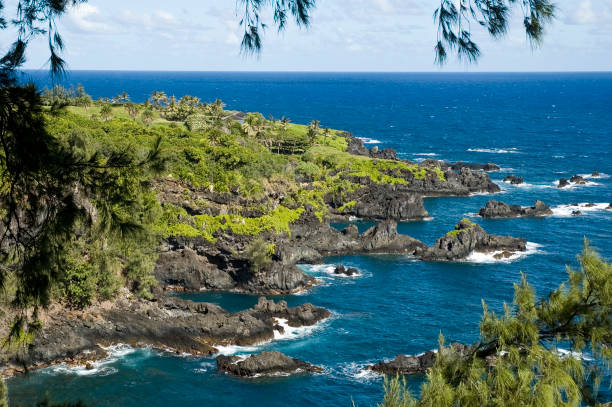
On Maui, plate lunches are woven into the daily rhythm. In Kahului, workers and travelers line up early at casual counters and food trucks before heading to the airport or upcountry. In Wailuku, old-school diners and bakeries serve saimin, dry noodles, and manju alongside plate lunches. In Kihei and Lahaina, beachgoers grab takeout and eat with sandy feet and ocean views. Upcountry in Makauao or Pukalani, the air is cooler and the portions seem even heartier. In Hana, after the long, winding drive, a simple plate lunch tastes like a reward. You do not need fine dining to eat well on Maui. Follow the locals, the lunch wagons, and the handwritten signs.
Part of the joy is the informal setting. You might order at a window, wait on a picnic table, and eat while chickens wander nearby. Prices vary, but plate lunch remains one of Maui’s best values, especially for families, hikers, and anyone who has just spent the morning swimming, snorkeling, or driving the Road to Hana.
Local comfort food goes beyond the plate lunch, too. Saimin, a noodle soup with Japanese, Chinese, and Hawaiian influences, is what many residents eat when they are sick, tired, or simply need warmth. Manapua, a soft bun filled with sweet pork, is a snack that disappears too quickly. Poke, cubed raw fish seasoned with soy sauce, sesame, and seaweed, belongs in the same casual conversation. So does a loco moco eaten at a diner counter, or a Spam and egg breakfast that keeps you full through a hike. These are foods of memory, family, and everyday life.
For visitors, trying a plate lunch is easy. Look for places with a line of pickup trucks, a menu board taped to the wall, and daily specials that sell out before mid-afternoon. Ask what is fresh. Try the kalua pork at least once. Get the mac salad even if you think you do not like mac salad; on Maui, it is creamier and less sweet, a cool counterpoint to salty, fried, or gravy-heavy mains. Order a mixed plate if you are curious. Sit outside. Eat slowly. Watch the light on the water or the mountains.
Maui’s beauty is famous, but its food is part of the island’s welcome. A plate lunch is not fancy, and that is the point. It is generous, practical, multicultural, and deeply satisfying. You may come to Maui for the beaches and the road to Hana, but you will leave craving rice, mac salad, and kalua pork. That craving is a souvenir no suitcase can hold.