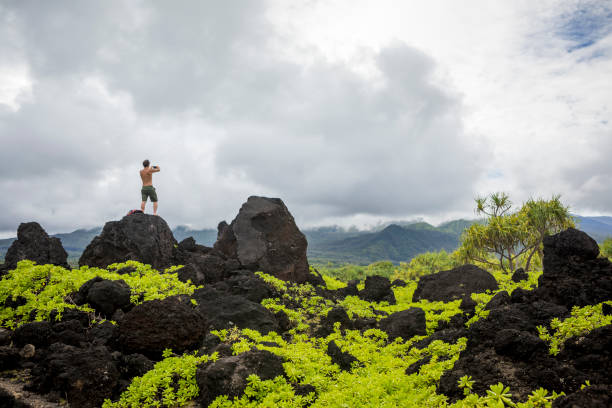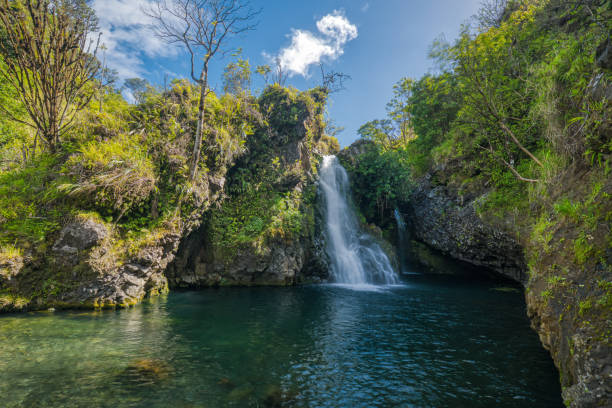
The Road to Hana is often treated as a day trip, a checklist of waterfalls, hairpin turns, and banana bread stands. But the true magic of East Maui begins when the day-trippers turn back. Staying overnight in Hana or deeper in East Maui changes everything. The rainforest exhales, the ocean keeps its own rhythm, and the stars appear without resort lights. A retreat here is not about pampering in the traditional sense, though comfort can be found. It is about slowing down enough to notice the island’s older, quieter soul.
Hana itself is a small town with a big presence. It sits at the end of the famous highway, wrapped in green hills and facing a rugged coastline. Accommodations range from simple inns and vacation rentals to a historic ranch-style resort steeped in time. Many visitors choose a cottage tucked into the jungle, where the sound of rain on the roof becomes a lullaby. Others prefer an oceanfront room where they can fall asleep to waves and wake before sunrise. The best retreats in Hana do not try to compete with Wailea or Kaanapali. They offer something else: privacy, authenticity, and a deep sense of place.
East Maui extends beyond Hana into Kipahulu, Kaupo, and the remote stretches along Haleakala’s backside. Here, retreats can be even more secluded. You might find a farm stay where you help gather fruit, or an off-grid cabin powered by solar panels. Some properties sit near the Pipiwai Trail and Oheo Gulch, giving hikers early access before the crowds arrive. Others overlook pastures that roll toward the sea, where paniolo history and Hawaiian tradition still shape the land. Staying in these areas requires planning, because services are limited and the roads demand attention. But that planning is part of the reward. You earn the quiet.
A retreat in Hana or East Maui is ideal for travelers who want to unplug. Cell service can be spotty, Wi-Fi may be slow, and that is often the point. Days begin with coffee on a lanai, listening to birds and wind. Mornings might include a swim at Hamoa Beach, a stroll through Hana town, or a hike into a bamboo forest. Afternoons are for waterfalls, tide pools, and reading in a hammock. Evenings bring early dinners, maybe fresh fish or locally grown produce, followed by a sky so full of stars it feels unreal. This is not a place for a packed itinerary, but for letting it dissolve.
Wellness is a natural theme in East Maui. Many retreats offer yoga, meditation, massage, or simply the space to practice stillness. The environment itself is healing. Trade winds carry the scent of plumeria and eucalyptus. Rain showers pass quickly, leaving everything glistening. The ocean demands respect, but a quiet morning swim or gentle paddle can feel like a reset. Couples come here for romance, solo travelers come for reflection, and families come to show children a version of Hawaii that is less commercial and more connected to nature.
Planning matters. If you stay in Hana, bring groceries, cash, and a full tank of gas. Reserve dinner if you want a restaurant meal, and check whether your rental has a kitchen. Drive the Hana Highway during daylight and pull over only in safe places. Respect private property, local residents, and sacred sites. The community here is generous, but it asks for awareness in return. Weather can be wet, so pack layers and rain gear. Mosquito repellent is not optional. Give yourself at least two nights, preferably three. One night feels rushed; three allow the road to fade and the retreat to begin.
The reward for staying in Hana and East Maui is not a list of attractions. It is a shift in pace. You remember the smell of rain on warm stone, the sound of waves at night, the taste of fruit picked that morning. You remember conversations with locals and the feeling of being far from everything yet exactly where you belong. For travelers who dream of Maui, this side of the island offers a different kind of luxury. It is the luxury of time, silence, and wild beauty. Once you experience it, the Road to Hana stops being a drive and becomes a destination.