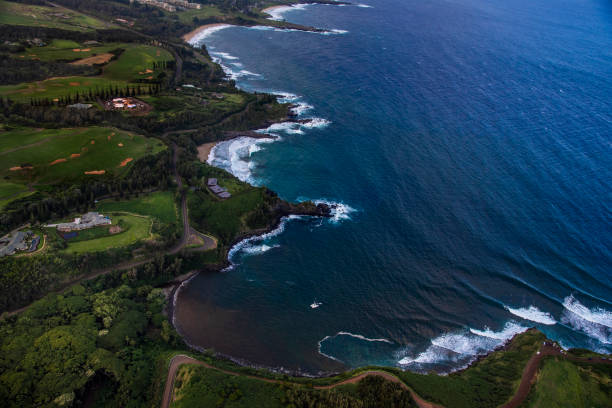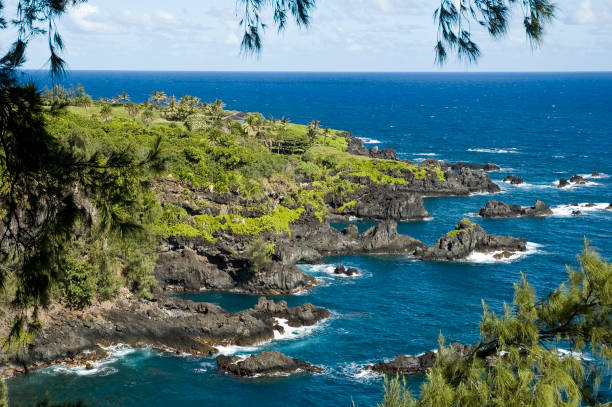
Maui did not begin with a postcard. Long before resorts, rental cars, and sunrise reservations on Haleakalā, Polynesian voyagers crossed the Pacific in double-hulled canoes, reading stars, swells, winds, birds, and clouds. They found these islands and made them home. On Maui, they settled in windward valleys, built lo’i for taro, carved irrigation channels, and fished the reefs. Their descendants developed the ahupua’a, a wedge of land running from mountain to sea. Each ahupua’a gave its people access to forest, fresh water, farmland, and ocean. That ancient system still shapes how Maui feels today. When you drive the road to Hana and see taro patches in Ke’anae, or pause at a heiau, you are not just looking at scenery. You are looking at a carefully managed world.
Early Maui was not one kingdom but a patchwork of districts ruled by chiefs. Rivalries were real, and alliances shifted. In the sixteenth century, Chief Pi’ilani united Maui and ordered roads, fishponds, and irrigation works that helped bind the island together. Later, Kahekili ruled with a reputation for power and strategy. Then came Kamehameha I, whose forces clashed in Iao Valley in 1790 at the Battle of Kepaniwai. So many warriors fell that the stream was said to be dammed by bodies. The victory helped Kamehameha on his path to unifying the Hawaiian Islands. Standing in Iao Valley today, with its green spires and mist, you can feel why this place carries deep mana. It is beautiful, but it is also a battlefield, a burial place, and a reminder that Maui’s history is not ornamental.
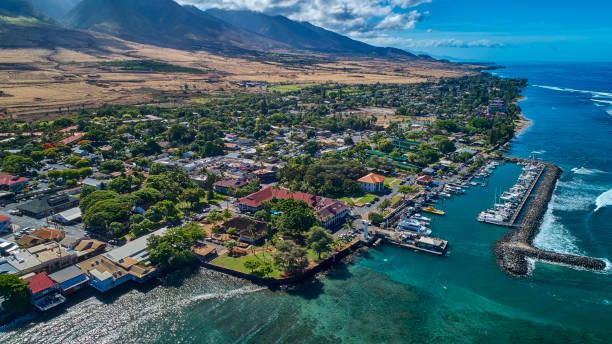
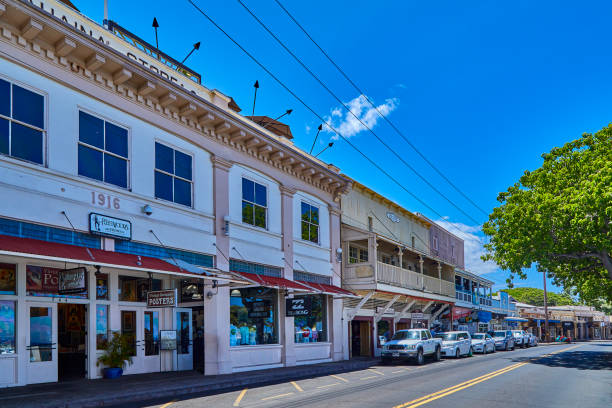
Foreign contact in the late eighteenth century changed everything. Whaling ships, traders, and missionaries arrived. Lahaina became a busy port and eventually a capital of the Hawaiian Kingdom. Missionaries brought printing, schools, and churches; whalers brought money, drinking, and conflict. The town’s streets still hold these layers. You can visit the Baldwin Home, the Wo Hing Temple, the Pioneer Inn, and the enormous banyan tree. Each tells a different part of the story. Lahaina was not simply a quaint waterfront. It was a crossroads of Hawaiian royalty, sailors, merchants, and missionaries, with all the tension that implies.
In the nineteenth century, land reforms and the rise of sugar changed Maui again. Plantations spread across the central plain. Because workers were needed, immigrants came from China, Japan, Portugal, Puerto Rico, Korea, and the Philippines. They brought language, faith, recipes, and traditions that became local culture. The plantation camps are gone or transformed, but their influence is everywhere. It is in the plate lunch, the malasada, the saimin, the sweet bread, the way people talk story, and the mix of names on old storefronts. Towns like Wailuku, Kahului, Paia, and Puunene grew around mills and railroads. Sugar and pineapple made fortunes, but they also diverted water and changed the land. That history matters when travelers wonder why some streams run low or why certain communities fight for water rights.
By the twentieth century, tourism became the new engine. Statehood in 1959, jet travel, and resort development transformed Kaanapali, Wailea, Kihei, and Lahaina. Visitors came for sun, surf, and scenery, and Maui became one of the world’s great destinations. Yet the old rhythms never disappeared. Hula, oli, lei making, canoe paddling, and family gatherings continue. Local families still care for fishponds and taro. Cultural practitioners ask visitors to respect sacred sites, stay on trails, and understand that a beach or valley may be more than a photo opportunity. The last sugar mill closed in 2016, and tourism now supports much of the economy. In August 2023, wildfire devastated Lahaina, adding another painful chapter to the island’s long story. Recovery is ongoing, and visitors can help by being thoughtful, patient, and generous.
For anyone planning a Maui trip, history is not a side note. It is the key to seeing the island clearly. Learn a few place names. Support local businesses. Visit museums and cultural sites with humility. Ask before entering private land. Remember that Maui’s beauty is not empty; it is layered with voyage, kingdom, plantation, and resilience. The more you understand that past, the richer your present experience becomes.