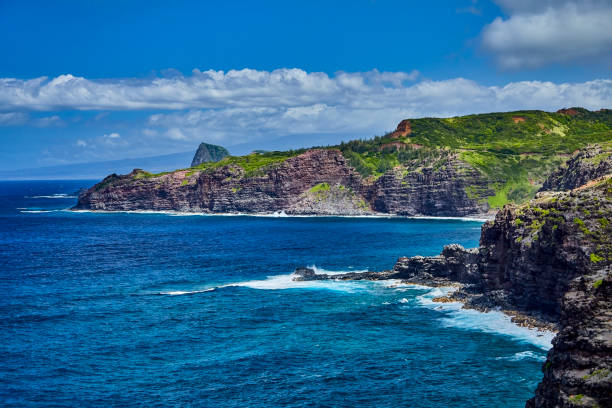
Every winter, something remarkable happens in the warm channels between Maui, Lanai, and Molokai. Thousands of humpback whales leave Alaska’s feeding grounds and swim nearly three thousand miles to Hawaii. Their destination is the shallow, protected water of the Auau Channel, and Maui sits right in the middle of the action. From December through April, these massive animals arrive to mate, give birth, and nurse their calves. Whale watching season on Maui is not just a boat tour. It is a natural spectacle that turns the coastline into a stage. A spout or a full breach can appear from a beach or a scenic overlook.
The season builds slowly. Late November and early December bring the first arrivals. By January, the channel is busy. February and March are the heart of the season, when the highest number of whales is present and surface activity seems constant. Mothers with newborn calves tend to appear later, from February into April, because calves need time to grow strong before the long journey north. April is a month of transition, with fewer whales but often calm weather. For the best odds, plan for mid-January through mid-March. For fewer crowds, aim for early December or late April and keep expectations flexible.
What makes Maui special is geography. The Auau Channel is sheltered by three islands, creating calm water where whales rest, play, and compete for mates. The west and south coasts offer excellent vantage points. Lahaina, Kaanapali, and Kapalua put you close to the channel, while Maalaea, Kihei, Wailea, and Makena offer long views. Boat tours depart from Lahaina, Maalaea, and Kihei, ranging from small rafts to stable catamarans with naturalists on board. Shore-based watching is just as rewarding. McGregor Point lookout, Papawai Scenic Lookout, and the Wailea Beach Path are excellent places to scan for spouts. Bring binoculars, because a whale that looks like a tiny splash can suddenly reveal a forty-ton body.
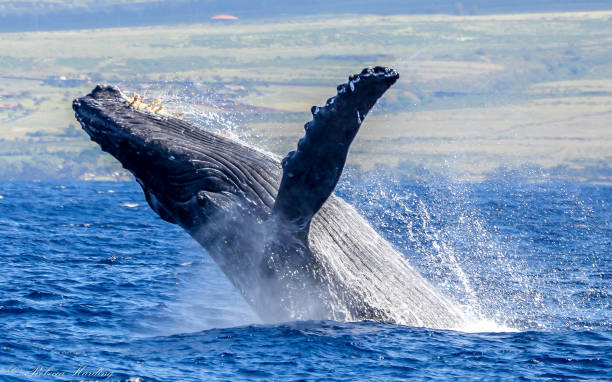
On the water, every trip is different. You might see a distant puff of mist, then a dark back rolling through the swell. A fluke might rise like a giant butterfly before the whale dives. Then there are the acrobats: humpbacks that launch into full breaches, slap the surface with their long pectoral fins, or pound their tails. Competition pods can turn the channel into a churning display of power as males chase a female. Mothers and calves often stay closer to shore, the calf learning to breathe and swim while the mother keeps watch. Some days are quiet. Other days are so active that passengers gasp and laugh at once. Patience is part of the experience.
Respectful watching matters. Humpback whales are protected in Hawaii, and federal rules require vessels to stay at least one hundred yards away, or three hundred yards if a calf is present. It is illegal to swim with humpback whales here. Boats should never chase, cut off, or surround a whale. If a whale approaches your vessel, the captain should put the engine in neutral and let the animal choose the distance. Choose a responsible operator that carries naturalists, follows approach regulations, and treats the ocean with care. The whales are not performing for us. When we give them space, everyone gets a better view.
Planning a trip is part of the fun. Book early for peak season, especially around holidays. Morning departures often have calmer seas and softer light. Bring layers, sunscreen, a hat, and polarized sunglasses. If you are prone to motion sickness, take precautions before boarding, or choose a larger catamaran and stay outside for fresh air. A camera with zoom and binoculars are worth their weight in gold. If the ocean is not for you, shore-based watching can be just as thrilling. Stay in west or south Maui for easy access to lookouts and beaches, and keep your eyes on the horizon whenever you stop for coffee or sunset.
There is quiet magic to whale season from land. You walk to the beach and see a spout rise against the blue. A minute later, a tail slides beneath the surface. In the evening, whales appear as dark shapes against a golden sea. These moments require no ticket or schedule. They simply ask you to slow down and pay attention. That is the gift of Maui in winter.