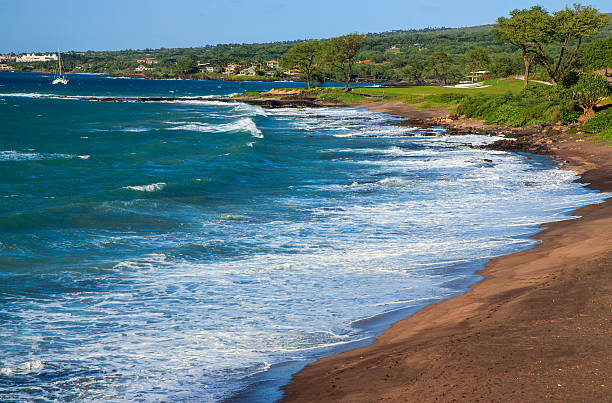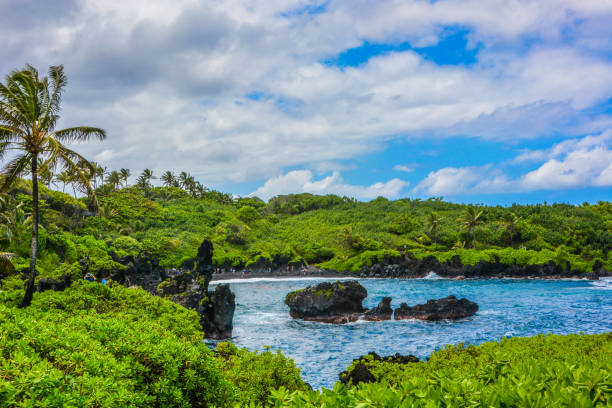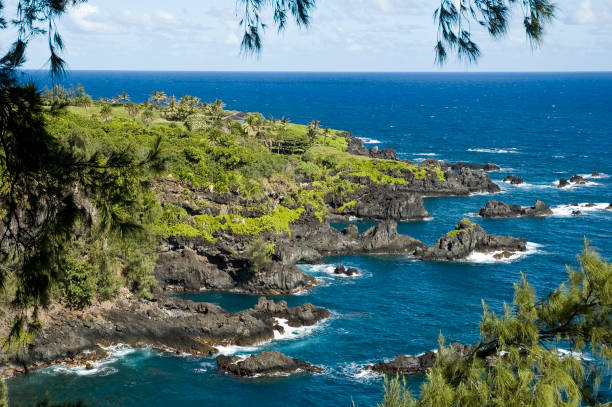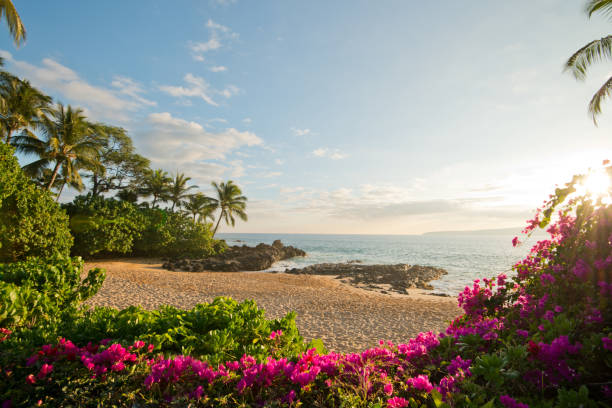
Tucked at the north end of Makena State Park, just beyond Big Beach, Little Beach feels like a secret Maui has never quite kept. You reach it by walking north along Big Beach, then climbing a short, steep trail over the rocky cinder saddle separating the two coves. The path asks for shoes with grip, patience, and a willingness to pause for the view. From the top, the coastline opens in both directions: the broad sweep of Big Beach behind you and, below, a smaller crescent of sand cupped by dark lava and bright water. This is South Maui—sun, salt, stone, and a horizon that seems to go on forever.
Little Beach, also known as Puʻu Olai Beach, has long been a place apart. Its unofficial clothing-optional tradition draws sunbathers, swimmers, and free spirits who appreciate sand where the usual rules feel looser. That reputation is worth treating with respect. Public nudity is not legal in Hawaii, and enforcement has shifted over the years. If you go, pay attention to current signage and the mood of the beach. The point is not to gawk or treat the place as a novelty. Enjoy the cove and its live-and-let-live atmosphere while understanding that tolerance is a two-way street.
The water here is gorgeous and sometimes serious. Little Beach faces west and catches swell, especially in winter and during strong trade-wind swells. The shorebreak can be punchy, and there is no lifeguard on this side. Even strong swimmers should study conditions before wading in. If the surf is up, admire it from the sand. If the water is calm, a swim can feel like floating in liquid glass, with Maui’s volcanic coastline rising behind you and the sun beginning its slow slide toward the sea.
But the real magnet is the Sunday drum circle. As afternoon leans toward evening, people gather with hand drums, guitars, flutes, and voices. Some come to dance. Some come to sit and listen. Some come simply to watch the sky turn orange, pink, and violet while the rhythm rolls out over the water. The drum circle is not a staged show with a start time. It is a spontaneous, community-minded gathering that has become one of Maui’s most unusual sunset rituals. On a Sunday, it feels less like an event and more like a conversation between the ocean, the musicians, and everyone who showed up.
If you plan to join, come prepared and humble. Parking at Makena State Park fills quickly on weekends. Arrive early, carpool if you can, and be ready to walk. Bring water, reef-safe sunscreen, a towel, and a light layer for after sunset. There are no concessions at Little Beach, and the nearest facilities are back at Big Beach. Leave glass and alcohol at home. Pack out everything you bring, including fruit peels and cigarette butts. The beach is not a festival ground with a cleanup crew. It is a living shoreline, and its beauty depends on people treating it that way.
The Sunday drum circle also asks for etiquette. If you take photos, be mindful of people who may not want to be in them. If you dance, make space for others. If you play an instrument, listen before you join the rhythm. If you are only there to watch, that is perfectly fine. The experience is best when it feels generous rather than performative. Around sunset, the drumming often swells, then softens. People drift toward the water. The sky does its thing. For a few minutes, strangers from all over the world share the same pulse.
Little Beach is not for everyone. It is a steep walk, a clothing-optional tradition, a sometimes-rough shorebreak, and a gathering that can be crowded or quiet. But that is why it matters. In a region famous for resort beaches and manicured sands, Little Beach keeps a wilder edge. It reminds you that Maui’s coast is not just a backdrop for vacation photos; it is a place of stories, rituals, and local customs. Go with curiosity, leave with sand in your shoes, and let the Sunday drum circle be one of those Maui memories that stays with you after the sun has gone down.