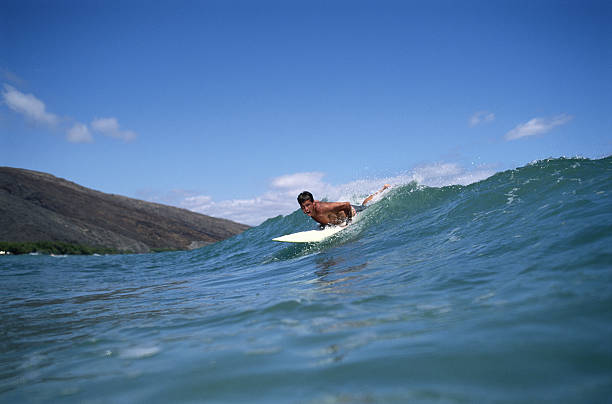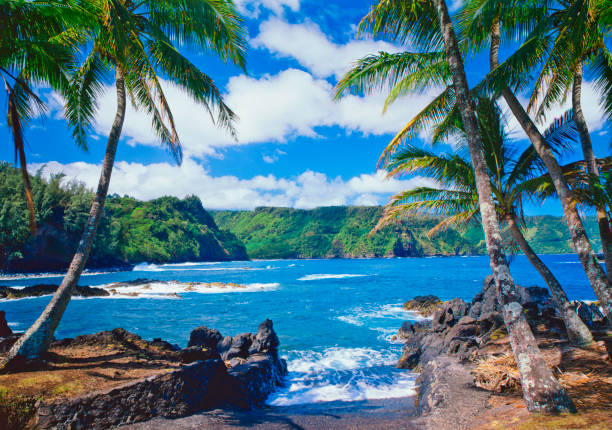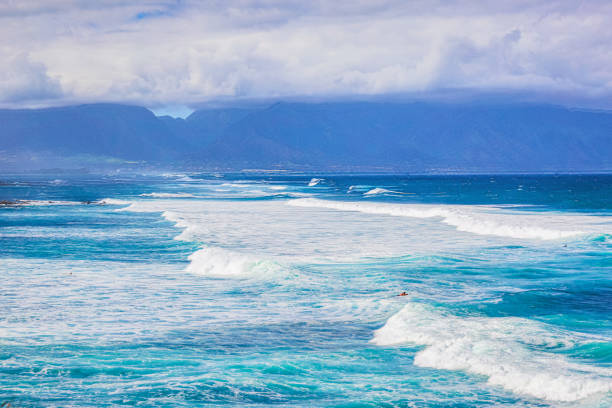
On Maui’s windward north shore, beyond the pineapple fields and rainforest gullies of Haiku, a deep-water reef focuses North Pacific swell into one of the most terrifying and magnificent waves on Earth. Hawaiians know the place as Peahi, but the world knows it as Jaws. The name is not marketing hype. When a powerful winter storm detaches from the Aleutians and sends a long-period swell toward Maui, Peahi transforms from a quiet blue horizon into a moving mountain of water, sometimes rising beyond fifty feet and exploding against the reef with the sound of a jet engine. For big-wave surfers, it is a proving ground. For everyone else, it is a reminder that Maui’s ocean is wild, powerful, and worthy of respect.
The wave at Peahi breaks far offshore, which makes it visible from the cliffs above but difficult to reach and even harder to ride. Pioneers in the 1980s and 1990s studied how swell bent around the reef. Tow-in surfing with Jet Skis first made the wave accessible, producing legendary rides, dramatic wipeouts, and global attention. Over time, a generation of athletes returned to paddling into Jaws, using specialized guns, inflatable vests, and years of water knowledge. Paddle-in surfing restored a raw, human-powered challenge to Peahi, and the lineup became a mix of tow-in teams and paddle chargers who trained relentlessly for the few days each winter when the swell was right.
What makes Peahi so compelling is not only its size. It is the way the wave shifts. A single swell can offer long, steep walls, treacherous closeouts, shifting peaks, and violent rebounding chop. The wind must be light or offshore. The tide must cooperate. The swell direction must hit the reef with just the right angle. When all those elements align, the wave can be ridden with surprising grace. When one element is off, even the best surfers in the world can be tossed like driftwood. This unpredictability is why Peahi remains a place of apprenticeship. Local watermen watch the buoys, study weather charts, and rely on a lifetime of ocean instinct. Visiting surfers who dream of Jaws quickly learn that respect is the first requirement, not courage.
For travelers, Peahi offers a rare chance to witness big-wave surfing without stepping into the danger zone. Winter swells usually arrive between November and March, and on the biggest days a crowd gathers along the dirt roads and overlooks above the bay. The scene has the energy of a natural amphitheater. Photographers set up long lenses. Trucks line the access road. Families sit on tailgates, sharing snacks and binoculars. A hush falls over the bluff when a set appears on the horizon, followed by cheers, gasps, and the unmistakable crack of a wave hitting the reef. It is a community ritual, part sport and part vigil. If you go, bring water, sun protection, and sturdy shoes. Stay behind barriers, respect private property, and never hike down when a big swell is running. The safest and most meaningful way to experience Peahi is from a distance, with awe and humility.
The surf culture around Jaws is deeply connected to Maui’s broader ocean lifestyle. Surf shops in Paia and Haiku buzz with swell talk. Shapers build longer, stronger boards for serious waves. Lifeguards, paramedics, and water safety teams train for the worst. And elders remind everyone that Hawaiian surfing is not merely an extreme sport; it is a cultural practice rooted in connection to land and sea. Peahi is not a trophy to conquer. It is a powerful elder in the lineup, demanding preparation, patience, and respect.
Even if you never paddle out, Peahi can change how you see Maui. A calm beach day at Baldwin or Kamaole feels different after you have watched a fifty-foot wave detonate offshore. The island’s beauty becomes more layered: not just palm trees and sunsets, but volcanic reefs, deep ocean swells, and a community that reads the weather like a story. For the frequent traveler or the first-time dreamer, Jaws is worth planning a winter trip around, not because you will surf it, but because you will witness something primal. On the right day, Maui shows you the raw edge of the Pacific, and you understand why surfers chase that feeling.